Introduction
Some video games impress players with spectacular graphics, intense combat, or enormous open worlds. Others capture attention through clever ideas, mysterious environments, and puzzles that encourage players to think differently. Blue Prince belongs firmly in the second category. Developed by Dogubomb and published by Raw Fury, this mystery puzzle game offers an unusual combination of exploration, strategic decision-making, roguelike mechanics, and atmospheric storytelling.
Rather than sending players on a traditional adventure filled with enemies and action sequences, Blue Prince invites them to explore a mysterious mansion whose rooms change as they progress. Every decision matters because players must choose which rooms to discover, how to manage limited resources, and which clues might help them understand the secrets hidden within the estate.
The result is a game that rewards curiosity, observation, patience, and experimentation. It can be incredibly satisfying when a difficult puzzle finally makes sense, but its unusual mechanics may also frustrate players who prefer straightforward progression.
So, is Blue Prince worth playing? Does its distinctive gameplay offer enough depth to justify the time investment, and who will enjoy it most? This review examines its story, gameplay, puzzle design, visuals, performance considerations, strengths, weaknesses, and overall value for gaming enthusiasts.
What Is Blue Prince?
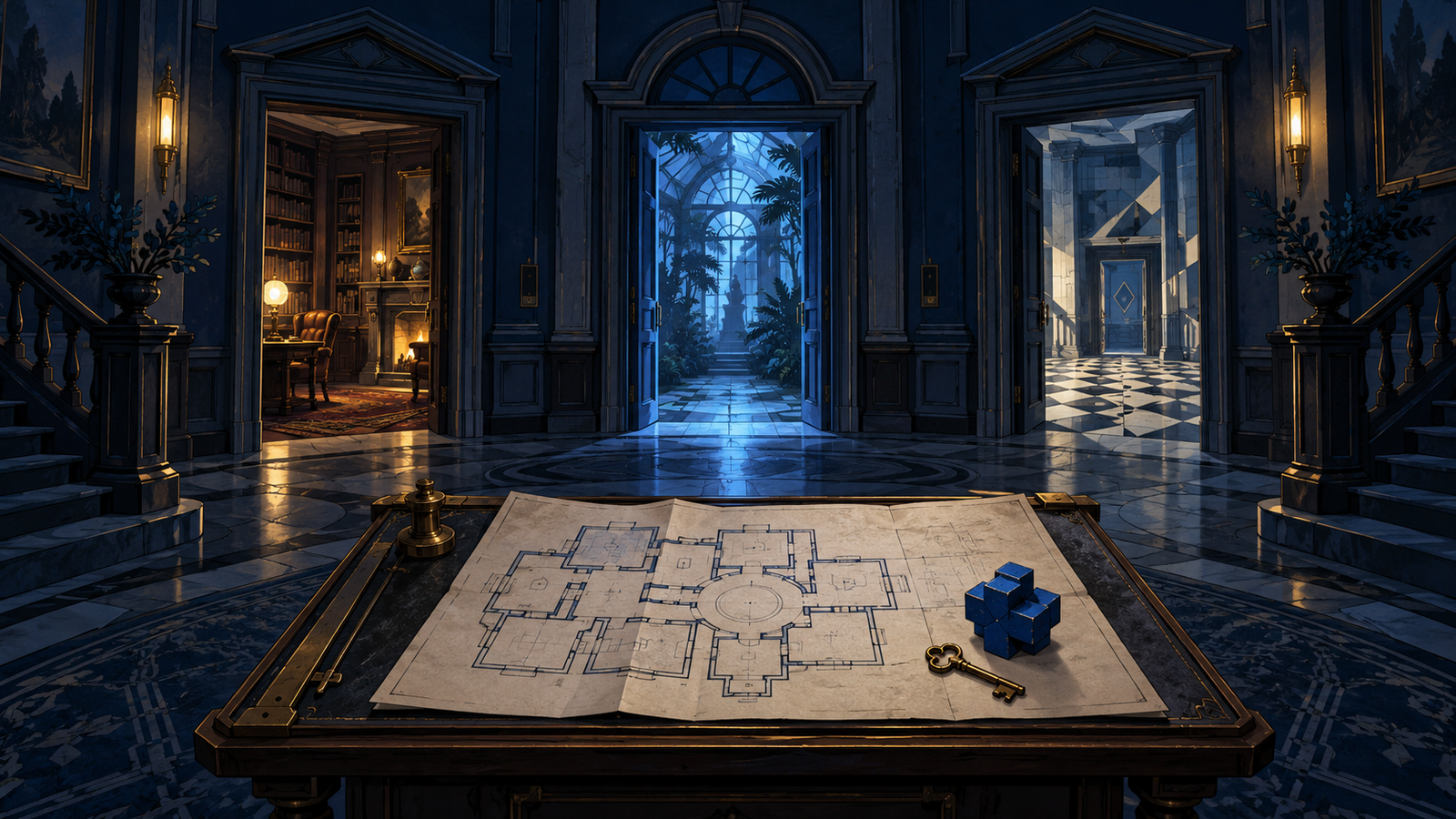
Blue Prince is a first-person mystery puzzle adventure centered on an extraordinary mansion known as Mt. Holly. Players explore the estate while attempting to uncover its secrets and discover the elusive Room 46.
The central premise sounds relatively simple, but the experience becomes increasingly complicated as players learn how the mansion operates. Its rooms are not arranged in a permanently fixed layout. Instead, players select rooms as they explore, creating different routes and opportunities during each attempt.
This room-selection system gives the game a strategic dimension. Every choice can influence which areas become accessible, what resources players discover, and how far they can progress.
The mansion also contains interconnected mysteries that extend beyond individual puzzles. Notes, objects, environmental details, and unusual events provide clues about the property’s history and the people associated with it.
Unlike conventional puzzle games that guide players through a carefully predetermined sequence, Blue Prince encourages independent investigation. Players must recognize patterns, remember important information, and connect discoveries that might initially appear unrelated.
The game is particularly appealing to people who enjoy intellectual challenges and the satisfaction of solving complicated mysteries without constant assistance.
Story and Mystery: The Heart of the Experience
The narrative provides an important reason to keep exploring Mt. Holly. Players inherit the mysterious estate under unusual circumstances and must investigate its secrets while pursuing the discovery of Room 46.
However, the story does not unfold through lengthy cinematic sequences or frequent dialogue. Much of its narrative is communicated through the environment and the information players uncover.
Documents, letters, inscriptions, and objects provide pieces of a larger mystery. Some discoveries explain immediate events, while others introduce questions that may not become understandable until much later.
This approach makes exploration feel meaningful. Finding a seemingly insignificant note can eventually change how players interpret an earlier event or understand a particular room.
The storytelling also encourages players to become active participants in the investigation. Instead of simply receiving explanations, they must construct their own theories and determine which details deserve attention.
One of the game’s greatest strengths is the relationship between its narrative and its puzzles. The mysteries are not merely obstacles placed between story sections. Solving them often becomes the primary method of understanding the world.
However, this storytelling style will not appeal equally to everyone. Players who prefer clearly explained narratives, frequent character interactions, or direct mission objectives may find the experience unusually indirect.
For players who enjoy piecing together fragmented information, however, the mystery is one of the strongest reasons to continue playing.
Gameplay: Choosing Your Way Through the Mansion
The defining feature of Blue Prince is its room-drafting mechanic.
Whenever players reach an available doorway, they select the next room from a limited selection of possibilities. Each room offers different opportunities, obstacles, and potential rewards.
For example, one room might contain useful resources, another might introduce a puzzle, and a third could provide access to an important location. Some rooms are more valuable in particular circumstances, making the order of exploration an important strategic decision.
Players cannot simply select every room they want. The mansion imposes limitations, and choosing one option can prevent access to another.
This creates a constant balancing act between immediate needs and long-term objectives.
Should you select a room that provides useful resources now, or choose a location that might help you reach a more important area later? Is it worth taking a risk for a potentially valuable discovery? Could a particular room make the remainder of your attempt more difficult?
These questions transform ordinary exploration into a meaningful decision-making process.
The game also incorporates roguelike elements. Individual attempts have limitations, and players gradually learn how to make better decisions through repeated exploration.
Importantly, progress is not simply about moving forward through a fixed sequence of levels. It involves developing knowledge about the mansion, understanding its systems, and using previous discoveries to improve future attempts.
This combination makes Blue Prince feel different from traditional adventure games.
The Roguelike Structure: Failure Becomes a Learning Opportunity
One of the most interesting aspects of Blue Prince is how it uses repetition.
In many games, restarting after failure feels like losing progress. Here, a failed attempt can still provide valuable information.
Players might discover a new room, identify a useful resource, learn how a puzzle works, or recognize a connection between two previously unrelated clues.
Even when an attempt ends without reaching a major objective, that knowledge can make the next attempt more productive.
This design encourages experimentation. Players can try unfamiliar routes, test different room combinations, and explore strategies that might initially seem impractical.
Over time, the mansion becomes less mysterious because players understand its rules more clearly.
However, the roguelike structure also introduces potential frustration. Repeating portions of the experience can become tiring when players already understand what they need to do but must spend time reaching the appropriate location again.
Some discoveries may depend on specific room combinations or resources, meaning that a good strategy does not always guarantee a successful attempt.
The game therefore rewards patience, but it also expects players to accept uncertainty.
If you enjoy games in which knowledge gradually becomes your greatest advantage, this system can be extremely satisfying. If you dislike repeating familiar sections, the structure may feel unnecessarily restrictive.
Puzzle Design: Challenging, Clever, and Sometimes Frustrating
Puzzles are the foundation of Blue Prince, and the game offers a broad range of intellectual challenges.
Some puzzles rely on observation. Players must examine rooms carefully, notice unusual details, and recognize patterns that are easy to overlook.
Others involve logic, deduction, numerical relationships, symbols, or the interpretation of written clues.
Certain challenges require players to connect information gathered in different locations. A clue discovered during one attempt may become useful much later, encouraging players to maintain notes and remember important details.
This interconnected design gives the puzzles a sense of depth. They rarely feel like completely isolated activities because discoveries can contribute to a larger understanding of the mansion.
The most rewarding moments occur when players recognize a connection independently. A confusing clue suddenly becomes understandable, or a previously overlooked detail provides the missing piece needed to solve a difficult problem.
These moments create a powerful sense of accomplishment without relying on combat or elaborate rewards.
However, the puzzle design can be demanding.
Some clues are subtle, and players may struggle to determine whether they have overlooked an important detail or simply lack the information required to proceed.
The game also offers relatively little conventional hand-holding. Players who expect frequent hints or clearly marked objectives may occasionally feel lost.
Taking notes can make a substantial difference. Recording symbols, room details, numerical patterns, and unresolved questions helps organize information that might otherwise become difficult to remember.
It is also useful to revisit earlier clues with a fresh perspective. A detail that seemed meaningless at the beginning may become important after discovering additional information.
Overall, the puzzles are one of the game’s strongest features, provided players enjoy solving problems independently.
Exploration and Room Variety
Exploration in Blue Prince is about more than discovering new scenery. Every room potentially changes the direction of an attempt.
Different rooms serve different purposes. Some provide access to resources, some introduce new puzzles, and others offer information about the mansion’s history.
The variety encourages players to consider how each location fits into their broader strategy.
A room that appears unimportant during one attempt might become essential during another. Similarly, a seemingly attractive option might create complications if it limits access to other areas.
This unpredictability makes the mansion feel dynamic.
The room-selection system also creates opportunities for players to develop individual strategies. Some may prioritize resource availability, while others focus on unlocking routes or investigating specific mysteries.
The experience becomes particularly interesting when players begin recognizing how room choices influence one another.
Nevertheless, the system can occasionally make progress feel dependent on circumstances outside the player’s control. If the desired room does not appear among the available choices, an intended strategy may need to change.
This uncertainty is central to the game’s design, but it may not suit players who prefer precise control over every aspect of their progression.
Graphics and Visual Design
Blue Prince does not depend on photorealistic graphics or spectacular visual effects to create its atmosphere.
Instead, its presentation focuses on architectural detail, carefully designed interiors, lighting, and environmental storytelling.
The mansion’s rooms establish different moods, helping distinguish spaces that serve different narrative and gameplay purposes. Furniture, decorations, objects, and other environmental details also contribute to the impression that Mt. Holly contains a history worth investigating.
The visual design supports the central mystery by encouraging players to pay attention.
An unusual object or a seemingly minor environmental detail might become relevant to a puzzle. Consequently, looking around is not merely an aesthetic activity but an essential part of playing.
The restrained presentation also complements the game’s thoughtful pace. Rather than overwhelming players with constant visual spectacle, it allows them to concentrate on the environment and the information it contains.
Although the graphics may not impress everyone looking for a technically demanding modern blockbuster, they work effectively for the experience Blue Prince aims to deliver.
Its strongest visual achievement is the way the mansion becomes both a setting and a puzzle.
Sound Design and Atmosphere
Sound plays an important role in establishing the mansion’s unsettling atmosphere.
The quieter presentation gives players room to concentrate while reinforcing the feeling that they are exploring a place filled with unanswered questions.
Ambient sounds and environmental audio help distinguish the experience from more action-oriented games. Instead of constantly directing attention toward combat or dramatic events, the soundscape supports exploration and investigation.
This approach is particularly effective when players enter unfamiliar areas. The combination of visual uncertainty and atmospheric audio encourages careful observation.
The soundtrack and overall presentation also support the game’s slower rhythm. Players are given time to consider their surroundings rather than being pushed continuously toward the next objective.
However, the restrained atmosphere may feel uneventful to players who prefer energetic music, frequent action, or dramatic audio cues.
For a mystery puzzle game, though, the emphasis on atmosphere is appropriate and helps establish a distinctive identity.
Difficulty and Learning Curve
Blue Prince is accessible in the sense that its central actions are relatively easy to understand. Players explore rooms, choose new locations, collect information, and solve puzzles.
Mastering the game is considerably more difficult.
The challenge comes from the interaction between its systems. Players must understand room selection, manage limited resources, recognize useful opportunities, and solve mysteries that may require information gathered across multiple attempts.
This means that difficulty is not determined solely by how complicated an individual puzzle might be.
Sometimes the biggest challenge is figuring out what deserves attention. At other times, players may understand a puzzle but struggle to reach the appropriate room or obtain the necessary resources.
The game generally expects players to learn through experimentation rather than relying on constant guidance.
For beginners, the best approach is to move slowly, investigate thoroughly, and avoid treating every attempt as a race toward immediate completion.
Keeping a notebook can be especially helpful. Even a simple list of unresolved clues and useful room combinations can improve the experience considerably.
Players should also accept that not every attempt needs to produce a major breakthrough. Learning one new rule or discovering one meaningful clue can represent worthwhile progress.
Performance and Platform Considerations
Blue Prince is available on PC, PlayStation 5, and Xbox Series X|S. Platform-specific performance and technical characteristics can vary, so prospective buyers should consult the current system requirements and store information for their preferred version.
Because the game emphasizes exploration and puzzles rather than demanding action sequences, its central appeal does not depend on having the fastest possible reactions.
That makes it attractive to players who prefer thoughtful experiences over competitive gameplay.
However, comfort and usability still matter. Players should consider their preferred control method, display setup, accessibility requirements, and whether they enjoy extended sessions spent reading clues and examining environments.
The game can encourage long periods of concentration, especially when several mysteries become interconnected. Taking breaks may help prevent mental fatigue and make it easier to recognize patterns after returning.
Before purchasing, PC players should verify the current minimum and recommended system requirements. Console players should check the relevant storefront for availability, updates, and any platform-specific information.
Replay Value and Long-Term Appeal
The replay value of Blue Prince comes from its combination of procedural room selection, interconnected puzzles, and discoveries that gradually expand the player’s understanding.
Because rooms and opportunities vary between attempts, exploring the mansion does not always produce the same sequence of events.
More importantly, the player’s knowledge changes over time.
An early attempt might focus on basic survival and understanding the available rooms. Later attempts can become more deliberate as players identify promising routes, remember useful clues, and recognize the relationships between different locations.
This creates a satisfying sense of progression without relying entirely on conventional character upgrades or increasingly powerful equipment.
The mysteries also encourage players to continue exploring even after achieving smaller objectives. A single discovery can introduce several new questions, giving curious players reasons to investigate further.
Nevertheless, the game’s long-term appeal depends heavily on personal taste.
Players who enjoy deduction, note-taking, and slowly building an understanding of complicated systems may find dozens of hours of engaging exploration.
Those who prefer clearly structured campaigns with frequent new mechanics and straightforward rewards may eventually find the repetition less appealing.
The game offers substantial intellectual depth, but its rewards are most satisfying for people who genuinely enjoy the process of investigation.
Pros and Cons of Blue Prince
Pros
1. Original gameplay concept
The room-drafting mechanic gives exploration a strategic dimension rarely found in conventional puzzle adventures.
2. Rewarding puzzles
The game encourages observation, deduction, experimentation, and independent problem-solving.
3. Intriguing mystery
Its fragmented storytelling gives players reasons to investigate the mansion and connect seemingly unrelated discoveries.
4. Meaningful replayability
Repeated attempts provide opportunities to learn new information and improve future decisions.
5. Atmospheric presentation
The environmental design and soundscape create an engaging setting without relying on constant action.
6. Strong sense of discovery
Solving difficult puzzles independently can deliver memorable moments of satisfaction.
Cons
1. Steep learning curve
Players must understand several interconnected systems before they can consistently make effective decisions.
2. Limited hand-holding
The game offers relatively little direct guidance, which can make certain mysteries difficult to approach.
3. Repetition between attempts
Some activities may become tedious when players need to revisit familiar areas.
4. Unpredictable room selection
A desired room or route may not become available when players need it.
5. Not ideal for action-focused players
Those seeking combat, fast progression, or constant excitement may find the experience too slow.
6. Requires patience
Meaningful progress can depend on careful observation and remembering information across multiple attempts.
Who Should Play Blue Prince?
Blue Prince is an excellent candidate for several types of players.
First, mystery enthusiasts will appreciate the opportunity to investigate an unusual location and gradually uncover its secrets. The experience rewards curiosity and encourages players to question what they see.
Second, puzzle fans will find plenty to enjoy in its emphasis on logic, observation, and interconnected clues. Players who like solving problems without immediately consulting walkthroughs will probably appreciate its design.
Third, fans of roguelike systems may enjoy the way each attempt combines uncertainty with long-term learning. The room-drafting mechanic creates strategic decisions that extend beyond simply choosing the shortest route.
Finally, players who appreciate atmospheric games with distinctive concepts may find the mansion’s design particularly compelling.
However, Blue Prince is less suitable for people who want constant combat, a straightforward linear campaign, or frequent explanations of every mystery.
It also may not be the best choice for players who dislike repetition or feel uncomfortable making progress without knowing exactly what to do next.
Understanding these preferences is important because the game’s greatest strengths are closely connected to the characteristics that may frustrate some players.
Is Blue Prince Worth Buying in 2026?
Whether Blue Prince is worth buying depends on what you expect from a game.
If you are searching for a traditional adventure with cinematic storytelling, combat encounters, and a clearly defined sequence of missions, this title may not match your expectations.
However, if you want something that challenges your reasoning and encourages you to think carefully about every decision, it is a compelling option.
Its room-selection mechanic provides a fresh approach to exploration, while its interconnected mysteries create a strong incentive to keep investigating.
The game also offers an experience that feels different from many mainstream releases. Instead of depending on increasingly elaborate action sequences, it builds excitement through discoveries and intellectual breakthroughs.
Before purchasing, check the current price on your preferred platform and compare it with other puzzle games you are considering. Pricing and promotions can change, so the best deal will depend on when and where you buy it.
You should also consider whether you enjoy games that require note-taking and repeated attempts. For players who love this style, the time investment can be worthwhile. For those who prefer more direct progression, the same design may become frustrating.
Overall, Blue Prince is best viewed as a distinctive mystery experience rather than an all-purpose recommendation for every gaming audience.
Final Verdict: Should You Play Blue Prince?
Blue Prince stands out because it combines mystery, puzzle-solving, exploration, and strategic room selection into a cohesive experience.
Its mansion provides a compelling setting, its puzzles reward careful thinking, and its roguelike structure turns repeated attempts into opportunities for learning.
The game is not without weaknesses. Its limited guidance, occasional repetition, and unpredictable room selection can make progress challenging. Players who prefer fast-paced action or straightforward objectives may struggle to connect with its slower approach.
Nevertheless, these limitations do not undermine its central achievement. Blue Prince offers a thoughtful experience in which observation and knowledge are often more valuable than reflexes or brute force.
Final rating: 9/10
For mystery enthusiasts and puzzle lovers, Blue Prince is well worth considering in 2026. Its distinctive mechanics, layered storytelling, and rewarding discoveries make it one of the more memorable choices for players seeking something intellectually engaging.
If you enjoy investigating unusual places, solving difficult puzzles, and uncovering secrets at your own pace, Mt. Holly deserves a visit.