Introduction
Zombie survival games have evolved beyond fighting endless waves of infected enemies. Modern survival experiences increasingly focus on difficult decisions, resource management, psychological pressure, and the consequences of trusting the wrong person. Quarantine Zone: The Last Check embraces this approach by placing players in charge of a checkpoint during a dangerous zombie outbreak. Instead of simply picking up a weapon and heading into battle, players must inspect survivors, identify potential infections, manage limited resources, and protect the people depending on their decisions.
Developed by Brigada Games and published by Devolver Digital, Quarantine Zone: The Last Check combines checkpoint inspection mechanics with survival management and the tension of a world threatened by infection. Its central concept is straightforward but effective: survivors arrive seeking safety, and you must decide who deserves entry and who could put the entire community at risk.
The result is a game built around suspicion, responsibility, and the consequences of imperfect information. Every inspection can become a stressful decision, particularly when the evidence is unclear and resources are running low.
But does the experience deliver enough depth to remain entertaining beyond its initial novelty? Is the checkpoint-management concept engaging, and how well does the game balance its survival systems?
In this Quarantine Zone: The Last Check review, we examine its gameplay mechanics, inspection system, resource management, atmosphere, strengths, weaknesses, and overall value to determine whether it deserves a place on your gaming list.
What Is Quarantine Zone: The Last Check?
Quarantine Zone: The Last Check is a zombie-themed simulation and management game centered on operating a quarantine checkpoint during an outbreak. You take responsibility for screening incoming survivors, determining whether they are infected, and making decisions that influence the safety of your settlement.
Unlike traditional zombie action games, where combat and exploration dominate the experience, this title places greater emphasis on observation and judgment. Your primary challenge is not necessarily eliminating zombies but recognizing threats before they spread.
Survivors arriving at the checkpoint may display symptoms, carry suspicious items, or present information that requires closer examination. Your job is to assess the available evidence and determine the appropriate response.
Accepting an infected person can create serious problems for the community. Rejecting a healthy survivor, meanwhile, can mean denying assistance to someone who genuinely needs protection.
These decisions establish the central conflict of the game: protecting the majority sometimes requires making choices that feel unfair to individuals.
Beyond inspections, the experience includes managing supplies, maintaining checkpoint operations, responding to emerging threats, and dealing with the practical challenges of surviving in a collapsing society.
The concept combines elements of inspection simulators, survival management games, and zombie fiction. Its appeal comes from making ordinary administrative tasks feel dangerous because mistakes can have consequences.
Gameplay: More Than Just Checking Survivors
The biggest attraction of Quarantine Zone: The Last Check is its core gameplay loop. Rather than following a conventional combat-focused structure, the game repeatedly asks you to examine people, interpret evidence, and make decisions under pressure.
This approach creates a different kind of tension from what players experience in most zombie games.
Survivor Inspection and Infection Detection
The inspection system is the foundation of the experience.
As survivors approach your checkpoint, you must examine their condition and determine whether they pose a potential infection risk. This involves paying attention to visible symptoms and using the available inspection tools to investigate suspicious cases.
A survivor might initially appear healthy but display warning signs that become apparent after closer examination. Another person might look unwell for reasons unrelated to infection, making an immediate rejection potentially unfair.
The challenge lies in distinguishing meaningful evidence from misleading appearances.
Players must develop a systematic approach rather than making decisions based entirely on instinct. Examining symptoms carefully, following inspection procedures, and checking relevant information can help reduce unnecessary mistakes.
This mechanic makes observation an important gaming skill. Players who rush through inspections may process more people quickly, but they also increase the possibility of overlooking a serious threat.
Conversely, examining everyone excessively can slow operations and create additional pressure elsewhere.
The balance between speed and accuracy is one of the game’s most important sources of tension.
Difficult Decisions and Moral Pressure
Inspection is not simply a technical exercise. It also creates moral dilemmas.
Imagine a survivor who appears suspicious but does not display conclusive evidence of infection. Allowing that person into the settlement could endanger others, but refusing entry could condemn an innocent individual to an uncertain fate.
The game places players in situations where perfect certainty is not always available.
These moments give the inspection process an emotional dimension. Decisions become more meaningful because the people standing before you are not merely numbers in a management interface.
The tension comes from having to choose between competing risks. Protecting the community may require strict screening, while showing compassion can introduce uncertainty.
This is particularly effective for players who enjoy games involving ethical decisions and consequences rather than straightforward victories.
However, the impact of these dilemmas depends on how clearly the game communicates the consequences of individual decisions. When players understand why a choice matters, the experience feels more rewarding. When outcomes seem arbitrary, difficult decisions can become frustrating.
Resource Management and Survival Strategy
A quarantine checkpoint cannot function without supplies, equipment, and careful planning. This is where Quarantine Zone: The Last Check expands beyond its inspection mechanics.
Managing limited resources forces players to think about immediate needs and future risks. Every decision must fit into a larger survival strategy.
Managing Supplies
Resources become especially important when the checkpoint must support survivors while remaining prepared for emergencies.
Medical supplies, operational equipment, and other essential materials cannot always be treated as unlimited. Spending resources carelessly may make the current situation easier while creating problems later.
For example, prioritizing one urgent need might leave fewer supplies available for another emergency. Similarly, failing to invest in necessary equipment can make inspections or defensive operations more difficult.
This encourages players to consider the broader consequences of their decisions.
Effective resource management requires identifying the most important needs, avoiding unnecessary expenditure, and maintaining enough flexibility to respond when circumstances change.
The system works best when players feel that their choices meaningfully affect their ability to survive.
Balancing Safety and Efficiency
Running a checkpoint involves competing priorities.
You need to screen survivors carefully, keep operations moving, protect available supplies, and respond to emerging dangers. Focusing too heavily on one responsibility can leave another neglected.
An extremely cautious approach may reduce certain risks but make processing survivors slower. A faster approach may improve efficiency but increase the possibility of mistakes.
The most effective strategy is to establish consistent procedures while remaining flexible when unusual situations arise.
This creates a satisfying management challenge because success depends on more than completing individual inspections. Players must also understand how their decisions affect the entire operation.
For fans of simulation games, this combination of routine tasks and unpredictable pressure can become the main reason to continue playing.
The Threat of Zombies
Although Quarantine Zone: The Last Check emphasizes inspections and management, the zombie outbreak remains central to its identity.
The infected represent the danger that makes every checkpoint decision important. They are not simply enemies to defeat; they are part of a larger crisis that influences the player’s responsibilities.
Creating Constant Tension
Zombie games often rely on sudden attacks, frightening encounters, and combat-heavy sequences to maintain suspense. This game approaches tension differently by making the possibility of infection part of ordinary decision-making.
A seemingly routine inspection can become stressful when the evidence suggests that someone might be dangerous.
The player must think about what could happen if the wrong decision is made. Even when no immediate attack occurs, uncertainty can make the checkpoint feel vulnerable.
This approach is effective because it turns preparation into an important part of survival.
Rather than waiting for danger to appear, players must actively work to prevent it from entering their environment.
The atmosphere benefits from this constant sense of responsibility. The checkpoint becomes a fragile barrier between the remaining survivors and a spreading catastrophe.
Defensive Responsibilities
The broader survival framework also introduces the need to protect the checkpoint and maintain its ability to operate during dangerous situations.
This adds another layer to the management experience. Resources and attention must be divided between identifying infected individuals and preparing for external threats.
Players who focus exclusively on inspections may find themselves unprepared for other challenges. Those who concentrate too heavily on defensive preparations may struggle to maintain efficient screening operations.
The need to balance these responsibilities reinforces the game’s central theme: survival depends on making several interconnected decisions correctly.
However, players looking primarily for constant action should understand that the game’s identity is rooted more strongly in management and inspection than in traditional zombie combat.
Graphics, Visual Design, and Presentation
The visual presentation of Quarantine Zone: The Last Check supports its tense survival premise.
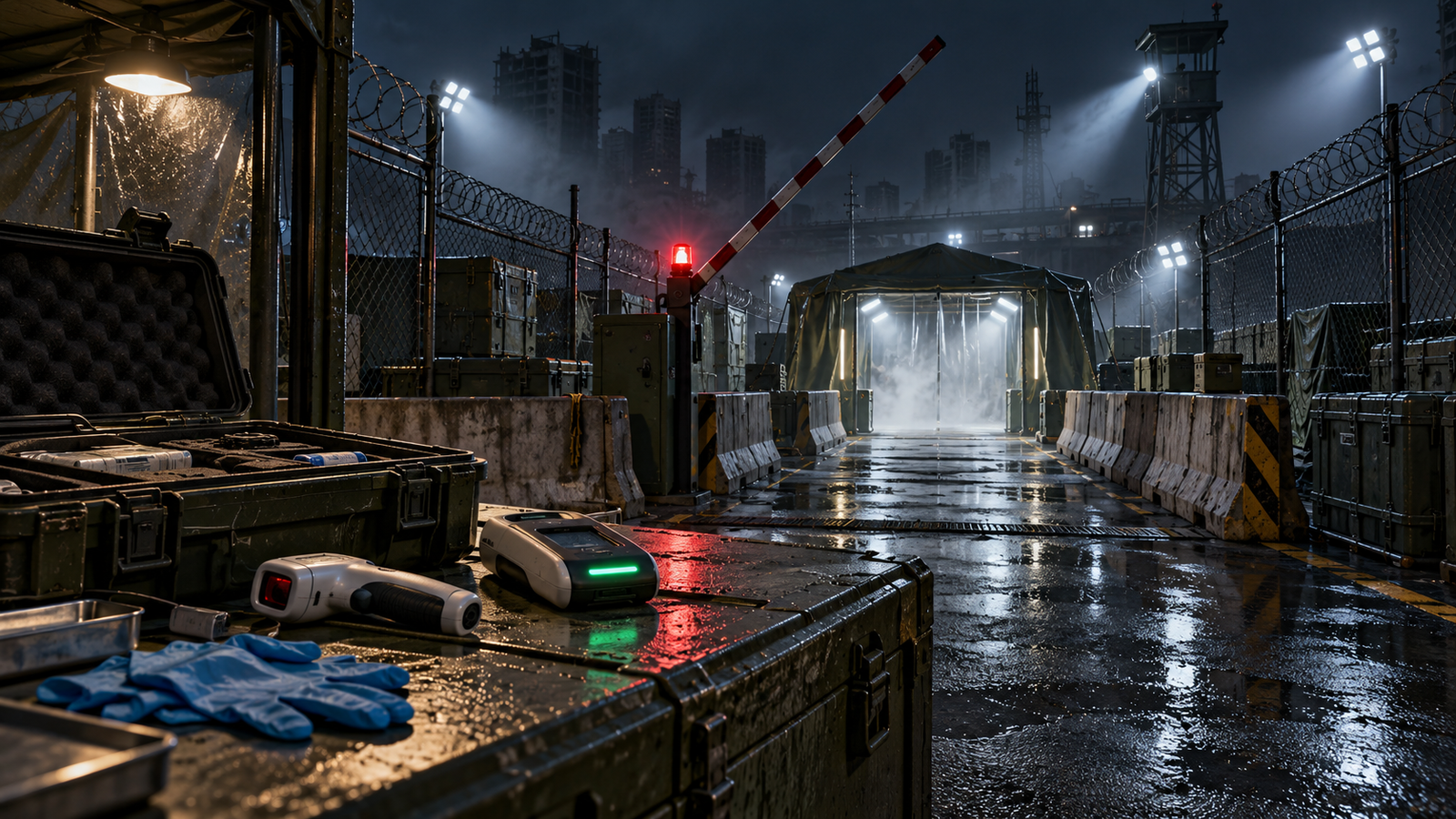
The setting communicates the atmosphere of a society attempting to maintain order during a rapidly deteriorating emergency. Checkpoint equipment, inspection areas, survivors, and environmental details help establish the sense that normal life has been replaced by emergency procedures.
The visual style serves a practical purpose as well. Because inspection is such an important part of the gameplay, players need to observe details and recognize potential warning signs.
Clear presentation is therefore more important than spectacular visual effects.
When important information is easy to identify, the inspection process feels fairer. When visual details are difficult to distinguish, players may struggle to understand whether an incorrect decision resulted from their own oversight or unclear presentation.
The game’s strongest visual moments come from the contrast between routine administrative work and the danger surrounding it.
A checkpoint might look like a place of order, but every person arriving at its entrance introduces another possibility of disaster.
That contrast reinforces the atmosphere without requiring constant action.
Sound Design and Atmosphere
Sound can make a significant difference in a game built around uncertainty.
Environmental effects, background sounds, and the audio atmosphere of a dangerous setting help create the impression that the checkpoint is operating under extraordinary pressure.
The strongest use of sound in this type of experience is subtle rather than overwhelming. Background noise can reinforce isolation, while changes in the audio environment can make unusual situations feel more significant.
Sound also helps establish a rhythm for gameplay. Quiet periods allow players to concentrate on inspections, while more threatening moments remind them that their responsibilities extend beyond the current survivor.
For players who appreciate atmospheric simulation games, this restrained approach can be more effective than constant dramatic music or nonstop action.
Progression and Replay Value
A management-focused game needs more than an interesting opening concept. Its systems must remain engaging as players become more experienced.
Quarantine Zone: The Last Check builds its appeal around learning how to handle increasingly demanding responsibilities, improving decision-making, and understanding the relationship between inspections and survival.
Learning Through Experience
Early inspections help players become familiar with the basic procedures. As they gain experience, they can develop a more efficient approach to evaluating survivors and managing their responsibilities.
This creates a natural learning curve.
At first, players may spend considerable time considering each decision. Eventually, familiar situations become easier to recognize, allowing them to process information more confidently.
The challenge is maintaining enough uncertainty to prevent the game from becoming entirely predictable.
If every situation follows an obvious pattern, experienced players may begin treating inspections as routine exercises. Varied cases and meaningful consequences help preserve engagement.
The best progression systems reward improved judgment without removing the need to pay attention.
Reasons to Return
Replay value depends on whether players find the decision-making process satisfying enough to experience again.
Players who enjoy experimenting with different approaches to resource management may discover new strategies during subsequent playthroughs. Others may return because they want to make fewer mistakes or handle difficult situations more effectively.
The central premise also creates opportunities for personal challenges. Players might adopt stricter screening standards, prioritize efficiency, or attempt to manage resources more conservatively.
However, replay value is not identical for everyone.
Players who enjoy mastering repeatable systems may find the experience rewarding for longer periods. Those who primarily seek extensive exploration, complex character development, or a constantly expanding world may eventually want more variety.
The game’s long-term appeal therefore depends heavily on how much enjoyment players get from its core management loop.
What Makes Quarantine Zone: The Last Check Stand Out?
Several qualities help distinguish the game from more conventional zombie survival experiences.
1. A Different Approach to Zombie Survival
Instead of making combat the primary activity, the game emphasizes identifying threats before they become dangerous. This creates a refreshing alternative for players who want something different from shooting-focused survival games.
2. A Strong Central Concept
Operating a quarantine checkpoint is easy to understand but creates numerous opportunities for difficult decisions. The concept gives the game a clear identity and connects its individual mechanics to a common purpose.
3. Meaningful Risk Assessment
Players must evaluate available evidence and decide how much uncertainty they are willing to accept. This encourages careful observation and strategic thinking rather than relying exclusively on quick reactions.
4. Management and Inspection Working Together
The experience combines individual survivor assessments with broader operational responsibilities. This relationship gives routine tasks greater significance because their consequences can extend beyond a single encounter.
5. An Atmosphere Built Around Uncertainty
The outbreak setting makes ordinary decisions feel consequential. Players are constantly reminded that the checkpoint exists because the outside world has become dangerous.
Together, these elements give Quarantine Zone: The Last Check a distinct appeal among zombie-themed games.
The Biggest Weaknesses
Despite its promising concept, the game also has potential limitations that prospective players should consider.
Repetition in the Core Gameplay Loop
Inspection-based gameplay naturally involves repeating similar actions.
Players examine survivors, evaluate evidence, make decisions, and return to the next case. This structure can be satisfying when the situations remain varied, but it may become repetitive if encounters begin to feel too similar.
The experience depends on maintaining enough unpredictability to keep familiar tasks interesting.
Players who prefer rapidly changing gameplay may find the repeated inspection process less exciting than action-oriented alternatives.
Limited Appeal for Action Fans
The zombie setting might attract players expecting intense combat, extensive weapon customization, or large environments filled with enemies.
However, the checkpoint-management premise emphasizes different skills.
Players spend much of their attention assessing situations, managing responsibilities, and making decisions. Anyone expecting a conventional zombie shooter should understand this distinction before purchasing the game.
The management-focused approach is a defining characteristic rather than necessarily a flaw, but it will not appeal equally to every player.
The Importance of Clear Feedback
Games built around inspection and decision-making must communicate their rules effectively.
Players need to understand what evidence matters, why certain decisions produce particular outcomes, and how their actions affect the checkpoint.
If the available information is unclear, mistakes may feel unfair rather than educational.
Likewise, management systems need to provide enough feedback for players to recognize whether their strategies are working.
Clear explanations and consistent consequences are essential for making the experience rewarding over time.
Potential Repetition After the Novelty Fades
The checkpoint concept is immediately appealing because it places players in an unusual role. However, an interesting premise cannot guarantee unlimited entertainment.
Once players become comfortable with the basic mechanics, the game needs sufficient variety and meaningful progression to maintain interest.
People who enjoy methodical simulations may appreciate mastering the systems. Others may find that the core loop loses some of its original excitement after extended play.
This is an important consideration for anyone deciding whether the game fits their preferred style.
Who Should Play Quarantine Zone: The Last Check?
Quarantine Zone: The Last Check is particularly suitable for players who appreciate thoughtful gameplay and systems that reward careful decisions.
Fans of inspection simulators will likely appreciate the process of examining evidence and deciding how to respond to uncertain situations.
Management enthusiasts may enjoy balancing resources, maintaining operations, and preparing for emergencies.
Zombie fans who prefer atmosphere and survival strategy over continuous combat may also find the premise appealing.
The game could be especially attractive to players who enjoy asking themselves difficult questions. Is the available evidence sufficient? Should a suspicious survivor receive another examination? Is protecting the community worth taking a risk on an uncertain case?
These questions provide much of the experience’s appeal.
On the other hand, players looking for an expansive open world, extensive exploration, sophisticated action combat, or a heavily character-driven narrative may prefer a different type of game.
Understanding the game’s focus is essential to appreciating what it offers.
Final Verdict: Is Quarantine Zone: The Last Check Worth Playing?
Quarantine Zone: The Last Check presents a compelling alternative to traditional zombie survival games by making responsibility, observation, and risk assessment its central attractions.
Its checkpoint-inspection concept creates tension without requiring every encounter to become a fight. Examining survivors becomes an exercise in judgment, while resource management adds a broader strategic dimension to the experience.
The strongest aspect of the game is the relationship between ordinary tasks and extraordinary consequences. A seemingly simple decision can matter because the checkpoint represents one of the remaining barriers against a dangerous outbreak.
The management mechanics also give players a reason to think beyond individual encounters. Success depends on balancing efficiency, safety, and available resources rather than focusing exclusively on one objective.
However, the same design that makes the game distinctive can also limit its appeal. Repeated inspections may become monotonous for some players, and those expecting a conventional action-heavy zombie adventure might find the pace slower than anticipated.
The overall experience is best suited to players who enjoy simulation games, strategic decision-making, and atmospheric survival scenarios.
Final rating: 8/10 — A promising choice for fans of inspection simulators and management-focused zombie survival.
The rating reflects the appeal of the game’s central concept and its suitability for players who appreciate deliberate, decision-driven gameplay rather than serving as a definitive technical assessment of every aspect of the finished release.
Ultimately, Quarantine Zone: The Last Check stands out because it asks players to approach a zombie outbreak from a different perspective. Instead of simply fighting the infected, you must decide who is safe, who represents a danger, and how to protect a community when certainty is impossible.
For players who enjoy thoughtful survival challenges, that responsibility can be more compelling than another game built around endless waves of zombies.